
Why What You've Been Told About Sleep Is Missing the Point
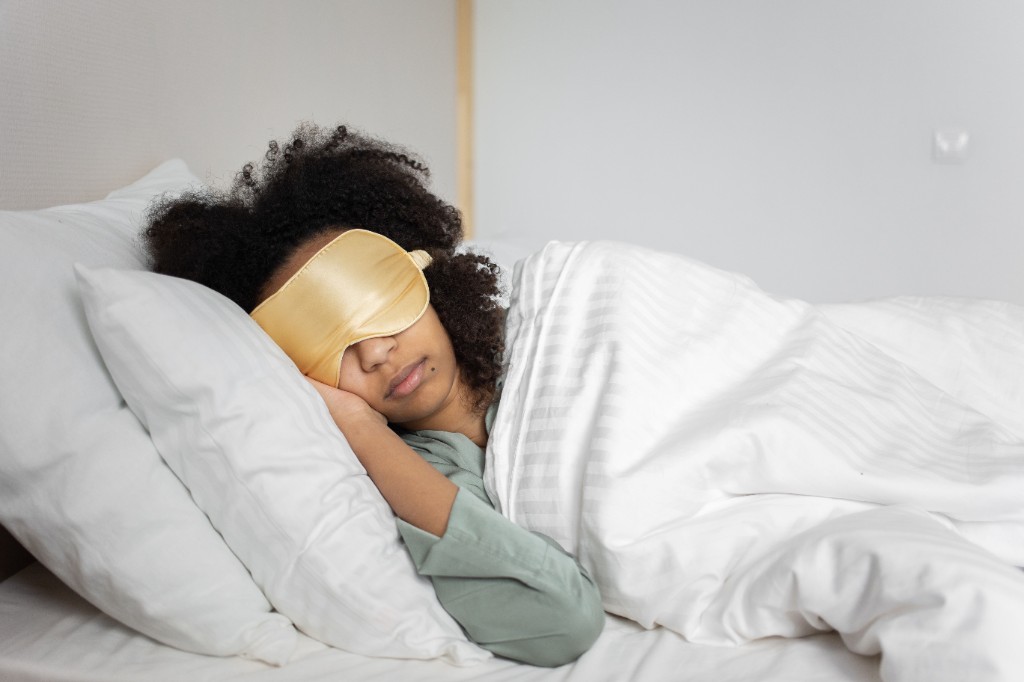
Cool room. No screens before bed. Consistent bedtime. Herbal tea.
If you've tried the standard sleep hygiene advice during perimenopause and found it did almost nothing, you're not doing it wrong. The advice is built for a different problem than the one you actually have.
This isn't a sleep hygiene problem
Standard sleep advice assumes the obstacle to good sleep is behavioural — habits that can be adjusted to fix the outcome. That's a reasonable assumption for a lot of sleep disruption. It's largely the wrong frame for perimenopause, where disrupted sleep is much more often a nervous system and hormonal issue than a habits issue.
What's actually going on
Oestrogen plays a meaningful role in regulating neurotransmitters connected to sleep and mood — as oestrogen fluctuates during perimenopause, that regulation becomes less stable, which can show up directly as disrupted sleep, independent of your bedtime routine. At the same time, many women experience a dysregulated stress response during this stage — the HPA axis (the system that governs your cortisol response) becomes more reactive, which can mean waking at 3am with a racing mind for no obvious external reason.
None of that responds to a cooler room or an earlier bedtime, because none of that is caused by room temperature or bedtime. It's physiological, not behavioural — which is exactly why the standard advice so often falls flat.
So what actually helps?
This is an area where the answer is genuinely individual — which is precisely why a generic "10 tips for better sleep" article is the wrong format for it. What helps depends on your specific pattern: whether your disruption is primarily falling-asleep difficulty, early waking, or fragmented sleep through the night; whether stress or hormonal fluctuation appears to be the bigger driver for you; how your sleep connects to your other symptoms, like mood and cognitive load through the day.
This is exactly the kind of connected picture Naomi, our AI, is built to help you see — because sleep in perimenopause doesn't exist in isolation. It's tied to your stress levels, your cycle, your mood, your day. Understanding your own specific pattern is the starting point for figuring out what's actually likely to help, rather than working through a generic list and hoping something sticks.
A small, practical addition: the Green Egg Scramble
While the deeper pattern work matters most, nutrition does play a supporting role — specifically nutrients connected to neurotransmitter production and nervous system regulation: tryptophan, magnesium, and folate. Our Green Egg Scramble (eggs, spinach, avocado, a scatter of pumpkin seeds) is a simple way to bring together all three in one meal — not a fix on its own, but a small, evidence-informed addition alongside understanding your broader pattern.
Where to start understanding your own pattern
If sleep has been a persistent problem and the standard advice hasn't touched it, that's worth taking seriously as a signal — not a personal failing. The Wellness Assessment is where you start building a picture that connects your sleep to everything else that's shifting, so you're working from your actual pattern rather than a generic checklist.
Published 25 Aug 2026
Start with the free Wellness Assessment
A few minutes with Naomi is the start of a picture that's specifically yours — not a generic perimenopause profile, but the pattern showing up for you, right now.
Not sure yet? Try the 2-minute check-in first →
Download the AppSources
- NHS: Insomnia
- Freedman (2014), Menopausal hot flashes: mechanisms, endocrinology, treatment
- NHS: Things you can do to help with menopause symptoms
This article is general information, not medical advice. Please speak to your GP or a qualified health professional before making decisions about your health.
Get the full perimenopause guide — free
Delivered to your inbox. No spam, unsubscribe anytime.