
Why Blood Tests Miss the Point — and What Actually Tells You Where You Are in Perimenopause
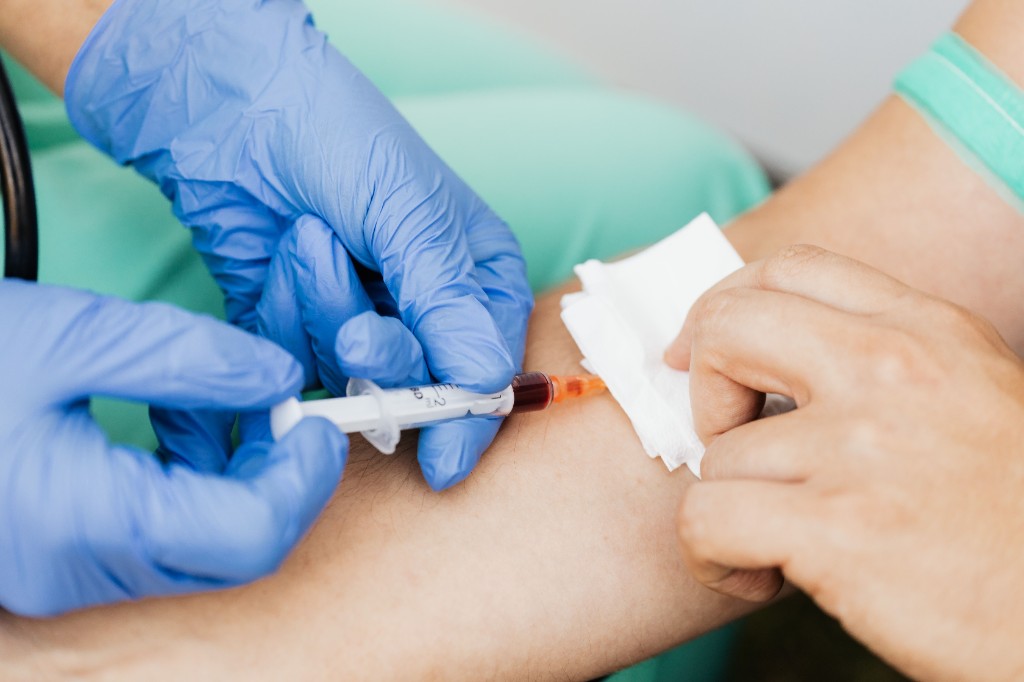
If a blood test has ever come back "normal" while you felt anything but, you're not imagining the disconnect.
It's a real, well-documented limitation of how hormone testing works during this stage of life — not a sign that nothing is happening.
Why FSH and oestradiol are the wrong tool for this job
During perimenopause, hormone levels — including FSH and oestradiol — don't decline in a steady, predictable line. They fluctuate significantly, sometimes within the same week, sometimes within the same day. A single blood draw captures one moment in a process that's inherently variable. That's precisely why UK clinical guidance (NICE) generally advises against using hormone blood tests to diagnose perimenopause in women over 45 with typical symptoms — the pattern of symptoms is considered more reliable than a single snapshot of hormone levels.
In other words: the test that sounds the most scientific is often the least useful one for this particular question. That's not a criticism of medicine — it's an acknowledgement that some biological processes resist single-point measurement, and perimenopause is one of them.
What actually tells you where you are
If a blood test isn't the reliable signal, what is? The pattern — the combination and evolution of your symptoms over time, across the dimensions that shift during perimenopause: cycle changes, sleep, mood, cognitive load, physical symptoms. That pattern, tracked and understood properly, tends to be a far more useful indicator than any single test result.
This is the exact gap Naomi, our AI, was built to fill. The Wellness Assessment captures that pattern in a level of detail a single conversation or a single test never could — and because it's grounded in an algorithm developed with scientific oversight, it's not guesswork dressed up as data.
What this means for you, practically
If you've been told your bloods are "normal" and left without answers, that doesn't mean nothing is happening — it likely means the test wasn't equipped to capture what's happening. The more useful question isn't "what do my hormone levels show today," it's "what does the pattern of my symptoms show over time." That's a different kind of measurement, and it's the one perimenopause actually calls for.
Where to start building your picture
The Wellness Assessment is designed to capture exactly that pattern — not a single snapshot, but a picture that becomes more precise the more you engage with it. It's free, and unlike a blood test, it's built specifically for a process that doesn't hold still.
Published 26 Jul 2026
Start with the free Wellness Assessment
A few minutes with Naomi is the start of a picture that's specifically yours — not a generic perimenopause profile, but the pattern showing up for you, right now.
Not sure yet? Try the 2-minute check-in first →
Download the AppSources
- NHS: Menopause symptoms
- The Menopause Society: Perimenopause
- NICE: Menopause: identification and management (NG23)
This article is general information, not medical advice. Please speak to your GP or a qualified health professional before making decisions about your health.
Get the full perimenopause guide — free
Delivered to your inbox. No spam, unsubscribe anytime.